
Project 1: Evolution of Robotics
Software Used: Synthesia & Storyline 360
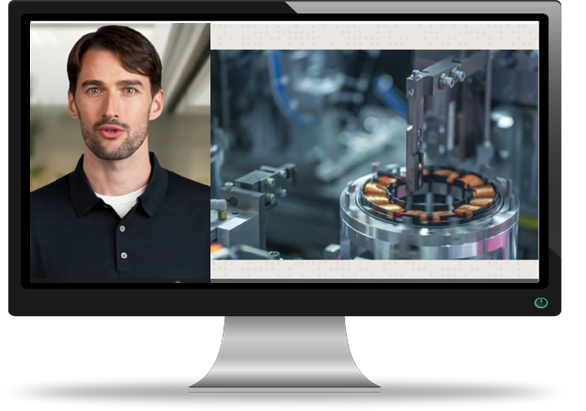
Challenge: Design an engaging, accessible learning experience that introduces beginners to the evolution of robotics, balancing core technical history with dynamic storytelling to foster curiosity and sustained engagement.
Solution: Partnered with an industry subject matter expert (SME) to develop a narrative-driven timeline script integrated with formative knowledge checks and milestone descriptions.
Instructional Design & Development
- Leveraged Synthesia to produce an AI-generated narrator, delivering a consistent, persona-led guide throughout the historical timeline
- Curated and edited multimedia assets to visually reinforce key mechanical and computational concepts
- Built the interactive module in Articulate Storyline 360, integrating custom triggers, variable-driven navigation, and seamless assessment interactions
Impact & Outcomes: Equips entry-level learners with a strong conceptual foundation in robotics, charting the industry’s progression from early manufacturing automation to modern machine vision and Industry 4.0 applications.
Project 2: Brain Chemistry
Software Used: Synthesia & Storyline 360

Challenge: Design an engaging learning experience that explains the complex neurological impacts of substance use, addiction, and psychological disorders on brain chemistry and cognitive function.
Solution: Collaborated with an industry SME to develop a comprehensive script exploring the neurochemical changes caused by alcohol and illicit substances, the neurobiology of addiction, and the role of brain chemistry in disorders such as schizophrenia and bipolar disorder.
Instructional Design & Development
- Leveraged Synthesia to produce dynamic, high-engagement video clips and visual assets
- Developed the module in Articulate Storyline 360, integrating interactive knowledge checks, custom triggers, and seamless navigation to optimize the learner experience
Impact & Outcomes: Equips learners with a foundational understanding of how neurochemistry, genetics, and environmental factors intersect to influence mental health conditions, including schizophrenia, depression, and anxiety.
Project 3: Perspectives About Culture
Software Used: Vyond & Storyline 360

Challenge: Design an engaging, scenario-based learning experience that enables learners to navigate the nuances, pitfalls, and complexities of cross-cultural communication. The objective was to equip learners with practical conflict-resolution strategies and demonstrate how cross-cultural competence fosters personal and professional growth.
Solution: Collaborated with an industry SME to author realistic, multi-branching scenarios depicting three distinct cross-cultural communication challenges. Each scenario incorporated targeted reflection points and decision-making prompts to guide learners through effective resolution strategies.
Instructional Design & Development
- Leveraged Vyond to conceptualize, script, and produce custom animated vignettes representing authentic interactions
- Built the module in Articulate Storyline 360, integrating multimedia assets, designing interactive knowledge checks, and programming advanced triggers and variables to ensure a seamless, adaptive user experience
Impact & Outcomes: Empowers learners with actionable frameworks and practical techniques to confidently identify, address, and resolve real-world cross-cultural communication barriers in their daily interactions.
Project 4: Factors that Affect Leadership
Software Used: Vyond & Storyline 360
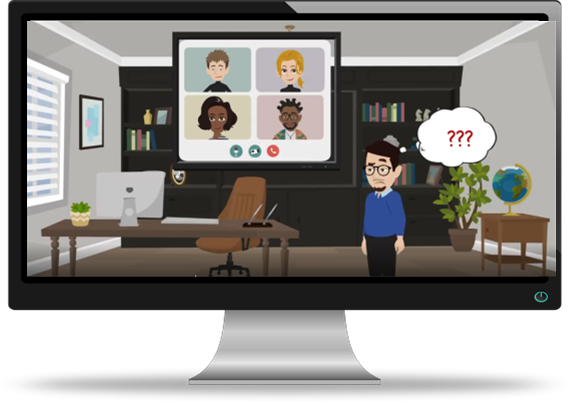
Challenge: Design an impactful learning solution to prepare consultants to advise a career development firm on the psychological, sociological, and environmental dynamics shaping modern leadership styles.
Solution: Partnered with an industry SME to create a series of scenario-based vignettes centered on the challenges of virtual work environments. Designed structured “expert perspective” reflection prompts and analytical questions that guide learners in identifying complex behavioral and environmental factors and evaluating their direct influence on leadership effectiveness.
Instructional Design & Development
- Leveraged Vyond to produce authentic, visually engaging, animated scenarios reflecting modern remote work settings
- Built the interactive experience in Articulate Storyline 360, integrating multimedia assets, programming advanced triggers, and embedding responsive decision-making exercises to ensure a seamless learner journey
Impact & Outcomes: Equips learners with the strategic insight, practical frameworks, and analytical skills needed to consult effectively and lead high-performing teams within increasingly virtual and evolving workplace landscapes.
Project 5: SMART Goals
Software used: Camtasia and Storyline 360
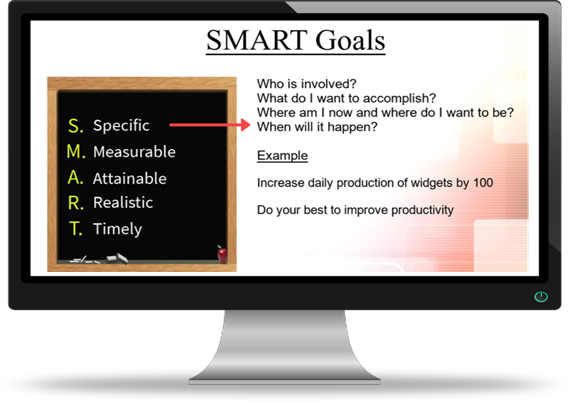
Challenge: Design an impactful learning experience to teach learners foundational goal-setting methodologies, centered on mastering the SMART framework (Specific, Measurable, Attainable, Realistic, and Timely) to drive business performance.
Solution: Collaborated with an industry SME to develop a scenario-driven script illustrating each component of the SMART framework in practical contexts. Created interactive “expert perspective” assessment prompts that challenge learners to identify flawed goal statements and refine them into rigorous, results-oriented objectives.
Instructional Design & Development
- Leveraged Camtasia to produce custom animated video sequences, visually translating core instructional concepts into clear, engaging media assets
- Built the module in Articulate Storyline 360, assembling multimedia elements, engineering interactive error-analysis exercises, and programming advanced triggers to deliver a seamless, intuitive learner journey
Impact & Outcomes: Equips learners with the practical skills and strategic mindset needed to construct actionable, measurable, and high-impact goals that consistently drive organizational and personal success.
Project 6: Communicating Risk
Software used: Storyline 360
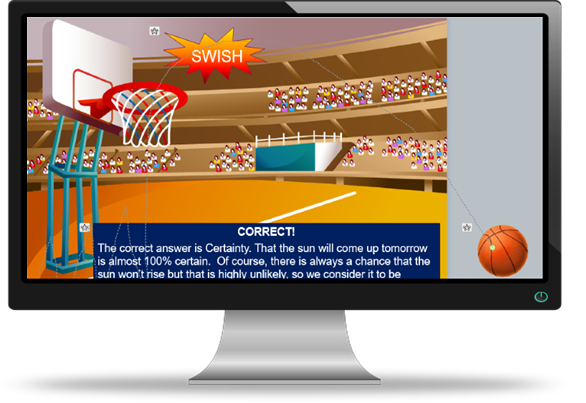
Challenge: Design an interactive learning experience to introduce core risk assessment fundamentals, focusing on building mastery of foundational concepts including ambiguity, uncertainty, heuristics, and cognitive bias.
Solution: Collaborated with an industry SME to develop targeted assessment items that challenge learners to analyze, differentiate, and correctly apply key risk assessment terminology and definitions.
Instructional Design & Development
- Engineered custom motion paths and advanced conditional triggers in Articulate Storyline 360 to build an interactive basketball free-throw simulation. The game mechanics dynamically reward correct responses with successful shots and provide immediate visual feedback for incorrect answers
- Grounded the experience in adult learning principles by leveraging gamification and active recall strategies to boost learner engagement, motivation, and knowledge retention
Impact & Outcomes: Facilitates seamless knowledge acquisition of complex risk assessment concepts by transforming abstract terminology into an engaging, visually dynamic, and highly interactive learning experience.
Project 7: Healthcare and Discrimination
Software used: Storyline 360
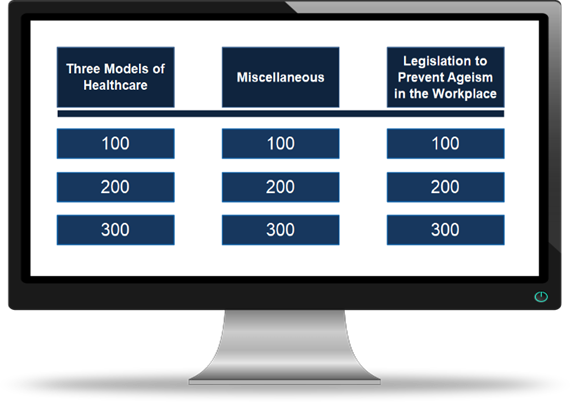
Challenge: Design an engaging instructional experience to introduce foundational models of American healthcare and examine the systemic ageism and legal protections impacting older adults within the healthcare landscape.
Solution: Collaborated with an industry SME to author comprehensive assessment scenarios and knowledge checks evaluating learner understanding of key healthcare programs and legislation, including Medicare, Medicaid, the Age Discrimination in Employment Act, and the Older Workers Benefit Protection Act.
Instructional Design & Development
- Engineered custom numeric variables and conditional triggers to build a Jeopardy!-style game-show interface in Articulate Storyline 360, incorporating challenge mechanics and audio elements across design iterations
- Grounded the module in adult learning principles by leveraging gamification and interactive recall to boost learner motivation, participation, and knowledge retention
Impact & Outcomes: Facilitates seamless knowledge acquisition of complex healthcare frameworks and age-discrimination policies by transforming dense regulatory content into an entertaining, visually compelling, and highly interactive learning experience.
Project 8: The Socially Constructed Self
Software used: Storyline 360
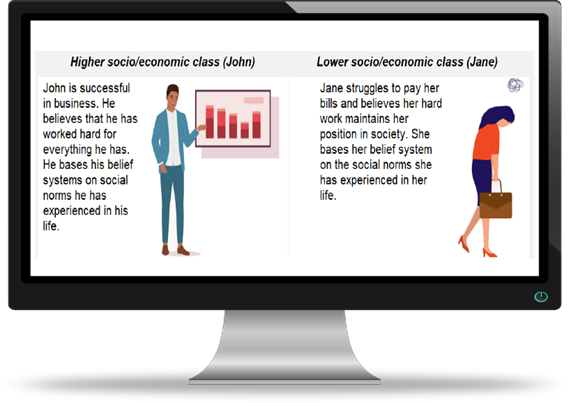
Challenge: Design an impactful learning experience that introduces the concepts of conventional (“inside-the-box”) versus innovative (“outside-the-box”) thinking, while examining the critical influence of socioeconomic environments on personal identity and cognitive development.
Solution: Collaborated with an industry SME to author a character-driven narrative contrasting two distinct socioeconomic backgrounds. Developed comparative biographical journeys alongside targeted reflection questions to guide learners in analyzing how formative environments shape individual perspectives, decision-making, and self-concept.
Instructional Design & Development
- Designed custom animations, character illustrations, and multi-panel narrative layouts in Articulate Storyline 360 to authentically depict the subjects’ diverse life paths.
- Engineered interactive knowledge checks and programmed advanced triggers to ensure intuitive navigation and a seamless, engaging learner journey.
Impact & Outcomes: Fosters critical cognitive flexibility and inclusive thinking—vital competencies in modern business environments—while cultivating empathy and a deeper appreciation for diverse socioeconomic perspectives and lived experiences.